

Play Therapy
Children may not always have the words to explain what they feel - but they can communicate with us through play.
A knocked-over tower, a carefully arranged dollhouse, a child burying and uncovering treasures in the sand. These moments may look simple, but they often tell an important story, and in therapy, that story becomes the starting point for growth.
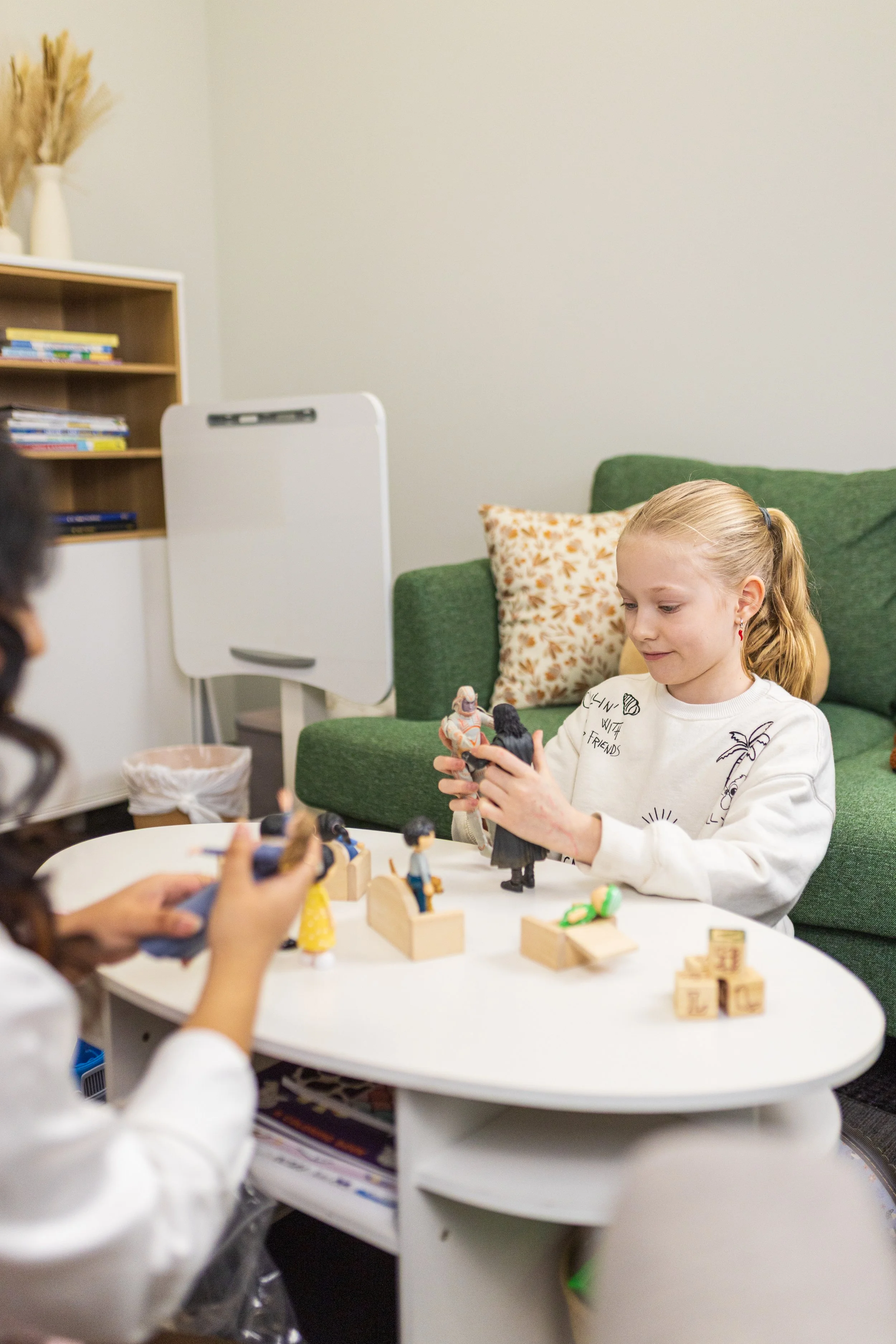
What is play therapy, and how can it help?
Play therapy is an evidence-based approach that uses toys, art, movement, storytelling, and creative activities to help children process emotions, build resilience, and develop healthy coping skills in a safe, supportive environment. Through play, children can express feelings they may not yet have words for, work through stressful or confusing experiences, build confidence and social skills, and feel understood and supported.
It can help children with:
Anxiety, worries, and fears
Big emotions and emotional regulation
Behavioural challenges and aggression
Social and friendship difficulties
School refusal and separation anxiety
Grief, loss, and life transitions
Trauma and stressful experiences
Self-esteem, confidence, and emotional withdrawal
Play therapy can be especially helpful for children who are:
Highly sensitive or deeply imaginative
Neurodivergent (including ADHD, autism, giftedness, and sensory differences)
Struggling to engage in traditional talk therapy
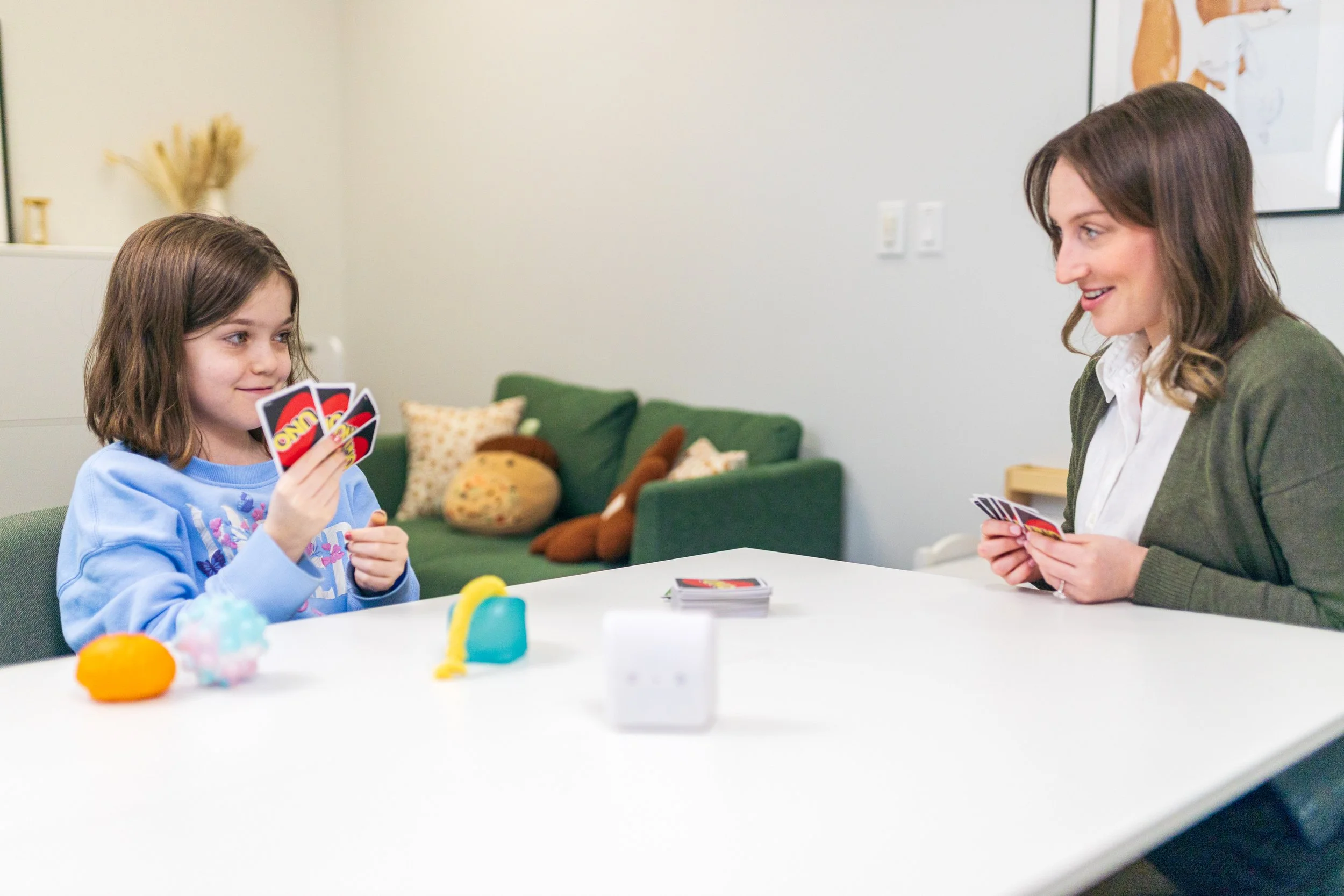
Our approach at Acorn Psychology
We provide play therapy for children and youth ages 3-16, tailoring sessions to each child’s developmental stage and unique needs:
Ages 3-6: Play is often the primary language of therapy. Sessions are highly experiential, sensory, and relationship-based.
Ages 7-11: Play remains central, while children begin integrating more reflection, emotional awareness, and skill-building.
Ages 12-16: Teens may still benefit from therapeutic play, creativity, and experiential strategies, blended with more traditional talk therapy approaches.
Every child is different, so therapy is individualized and may include:
Child-centred play therapy
Sand tray therapy
Art and creative therapies
Sensory and movement-based activities
Imaginative play and role play
Cognitive-behavioural play strategies
Emotional regulation and coping skills
Parent-child play sessions
We follow your child’s lead, while gently helping them build the tools they need to move forward.
Parents are an essential part of the therapeutic journey. We work closely with caregivers by providing:
Feedback on your child’s progress and themes from sessions
Practical strategies for home
Guidance for supporting emotional regulation
Parenting tools that strengthen connection and confidence
When parents understand the why behind their child’s behaviour, change becomes more possible for everyone. Because when children feel safe enough to play, they begin to heal. And when they heal, they grow.